
Telehealth: Friend or Foe?
- Seth Nickinson
- May 1
- 6 min read

How Telehealth Can Make Therapy More Accessible
Our team at the Center for Embodiment Medicine see hundreds of clients each month online and via phone sessions. We are proud to be able to offer high-quality telehealth at affordable rates, and know that for many clients it provides an amazing combination of positives -- supportive care, low cost and ease of access -- all in a low-anxiety setting. While we still see most people in-person, we celebrate the benefits of telehealth in many cases.
Let's explore why. We'll take a look at the clinical, logistical and social justice / accessibility reasons to love telehealth, and also answer "Does it work?"

A Decade-Long Journey
Ten years ago, the idea of doing therapy online was fringe. Many of us had never joined a Zoom meeting or a Google Meet. Then along came a boom in high-speed Internet connections, better coverage for mental health insurance plans and the dreaded COVID-19 epidemic. Suddenly, family life, education, entertainment and even medicine have moved online.
Clinical Benefits of Telehealth
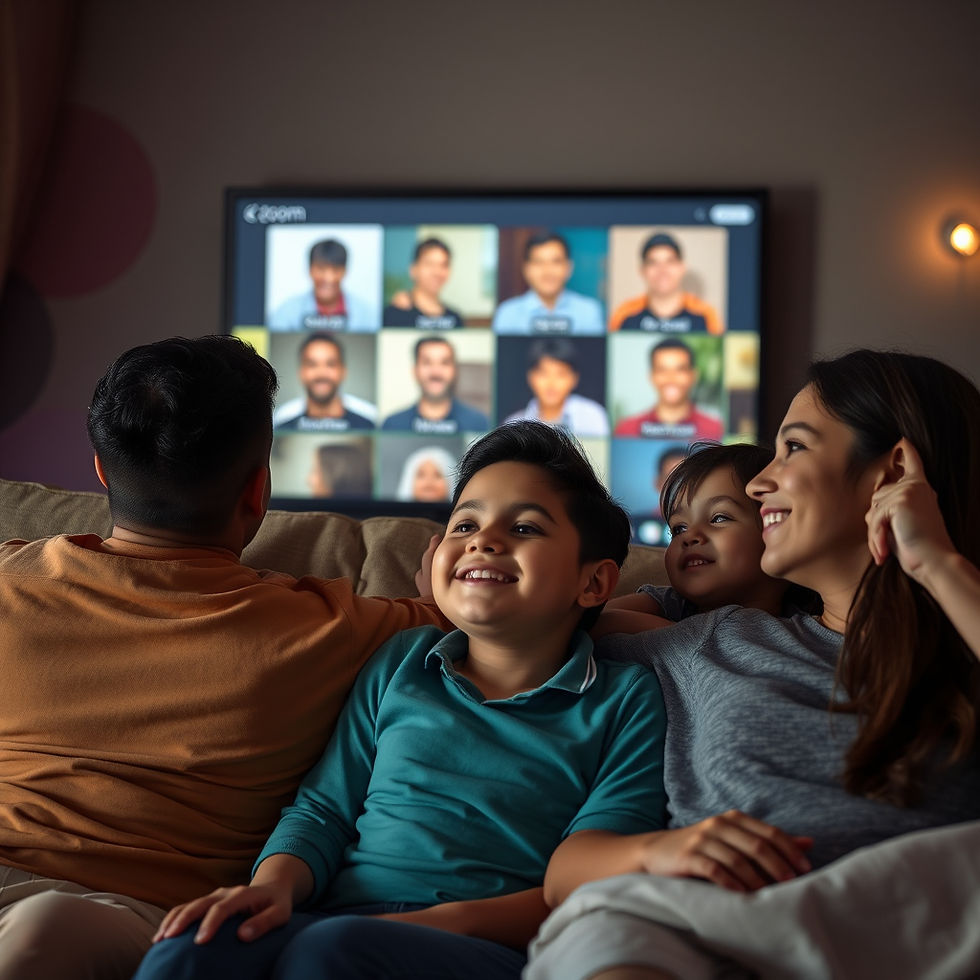
There are many clinical reasons to love telehealth. If you have a safe, cozy home it can provide a strong "sense of safety," also referred "felt safety." That is an experience where your nervous system feels truly secure, relaxed and stable, and not just because your conscious thoughts tell you that you ought to be OK. Being in your own space, surrounded by your things, can help support this sense of deeply held safety and emotional regulation.
It can be incredibly comforting to be taking therapy on your own couch or in your own bed, snuggled up with your own pet, holding your favorite beverage, or tucked under your own blanket. With telehealth, you have the opportunity to have all those things right at your side, while you see your therapist! Many of us come to appreciate our therapist's office over time, feeling it's a location where we are welcome and secure, especially if we have a chaotic home life. But there can be a real magic to your own space.
For people who experience social anxiety, heading out to a new building, to meet a new therapist, can be an overwhelming experience. Of course, our clinicians are all warm amazing people who aim to make clients feel welcome. But Telehealth allows clients who may experience agoraphobia, severe anxiety, or who are neurodivergent, to have one less thing to cope with in their environment and experience.
Is Telehealth Effective?
Our own experience as therapists tells us “yes” - we are seeing beautiful progress, personal growth, and healing for clients who meet with us via telehealth.
The data shows the same thing. “Meta studies” collect the results of a variety of other peer-reviewed studies, check them for quality, and do hard statistical analysis on those studies. . Recent meta-studies are showing the online therapy works just as well as in-person for a variety of issues that clients face including depression, anxiety, and PTSD (Greenwood et al 2002; Ibrahim et al 2025)
A common fear is that the “connection” between people can be lost online. In therapy-speak, we refer to this as the "therapeutic alliance” - the bond between therapist and client. Another significant 2024 meta study (Seuling et al) demonstrated that the therapeutic alliance is JUST as strong with telehealth as in-person.
Telehealth from the Therapist's Point of View
From the therapists’ point of view, being on a Zoom session can be like sitting in your home with you. Anthropologists call this the "kitchen table effect." Around the kitchen table is where many of us can speak our honest truth. Telehealth offers a chance for you to invite your therapist in, rather than vice versa. It can grant you more control and also a chance to show off that neat collection of…whatever it is you collect!
Having the protective shield of a computer screen can also allow clients to loosen up. This is what’s known as “online disinhibition.” The same forces that can cause people people to troll or act rude online, can act positively in therapy, allowing you to open up more than your might in-person, to share truthfully and let out your big feelings.

Practical Reasons for Telehealth
There are also many practical, logistical reasons why telehealth can be great.
Many of our clients are young people, including kids and teenagers, who can't yet drive or otherwise get themselves around. We also see many seniors who have limited mobility, and people with disabilities. Telehealth allows a lot more people to manage their own therapy.
Finding time in busy schedules for therapy can be challenging. Your therapists’ office may not be right near your home, school or work. Telehealth can make it easier to fit in a full 50-minute session in your day, without having to commute. You go to your comfortable corner of your home, pop open your machine, and join your session.
Not having to physically get to a office for therapy can relieve a burden and barrier for our clients and their parents, support teams and caregivers.
Social Justice Reasons for Telehealth
This brings us to something very important to the Center for Embodiment Medicine - social justice. By this, we mean our commitment to making therapy accessible to all. It's a driving reason why we accept Medi-cal and keep our private pay rates reasonable.
Telehealth doesn't require gas money or bus fare to get to therapy. It doesn't require asking for a ride or getting picked up. (Yes, it does require a quality phone or internet connection, and privacy, and we know those are a luxury for some people).
Telehealth also allows us to offer our services in communities and counties where we don’t (yet) have a physical presence. Right now, our clinicians are seeing clients in-person in Santa Cruz and San Rafael (Marin County). However, we accept Med-cal and insurance in a whole range of counties throughout California. Do you live in San Benito County or Yuba County, or in the heart of San Francisco or Oakland? We see clients remotely in those places, and dozens more counties in California.
Offering telehealth in communities with fewer therapists helps us meet our mission of offering the highest-quality therapy for mind, body and spirit to everyone who needs it.
Through our contracts with Partnership Health Plan, Central California Alliance for Health, Alameda Alliance and San Francisco Health Plan, we can see you remotely, at a time that works for you!

Is Telehealth Safe?
All our clinicians use HIPAA-compliant software to conduct telehealth. HIPAA is a health care law protecting client privacy. Using HIPAA-compliant programs means our software providers are in a contractual relationship with the Center to protect your information just as we do. It also means the video and audio is encrypted end to end, and has strict access controls as to who can get to the data.
The biggest risk in telehealth is actually on the client side. You need to make sure that you are in a private, safe place, where your session is not being overheard. Sitting in a coffee shop or hidden away in a closet where your family hopefully cannot hear is not a good setup for successful therapy. We don’t want people overhearing you, and we want you to feel safe. If you are in an unsafe home or work environment, or are unhoused, absolutely, come see us in person!
When Is Telehealth Not the Right Call
There are still situations where it might be more appropriate to do in-person work, and your therapist might recommend it. Those include high-risk or crisis situations, like if you are dealing with active suicidal ideation or severe self-harm.
We offer amazing eco-therapy and somatic interventions at the Center for Embodiment Medicine. Both can happen via telehealth. Clients can connect with nature in and around their own home, and can work with their own body experiences sitting in their own chair. But there can also be real value in doing these practices in person, and getting to see and hear each other fully.
The biggest challenge of telehealth is the same as in-person: to get the most out of it, you have to set aside time in your day for therapy. You might be tempted to jump right into therapy from a work call or feeding your kids, without any transition time. There may be notifications and distractions available on your screen that wouldn’t be present in an office setting.
Therapy is time for you, supported by our our caring therapists. For some clients, arriving at an office, walking through a set of doors you only enter once a week, and entering a special space creates a sense of separation that helps their therapy along.
What Does the Center Offer?
The Center for Embodiment Medicine is proud to offer high quality. whole-person therapy, both in-person and online, for kids, teens, adults, seniors and families. We accept Medi-cal in over 20 counties in the State of California. Even our private pay sessions are relatively low cost. We want to make sure everyone who needs therapy can get it.
Our clinicians work in-person and online. You can also have “hybrid” therapy, where sometimes you see your clinician on a screen and sometimes in-person. That is up to you to decide together.
We believe that telehealth will be a big part of the future of psychotherapy. We stay up to date with best practices and provide training to our team on how to do their best work on telehealth.
Interested in trying telehealth therapy? Let your clinician know, or schedule today with the link below.


Comments